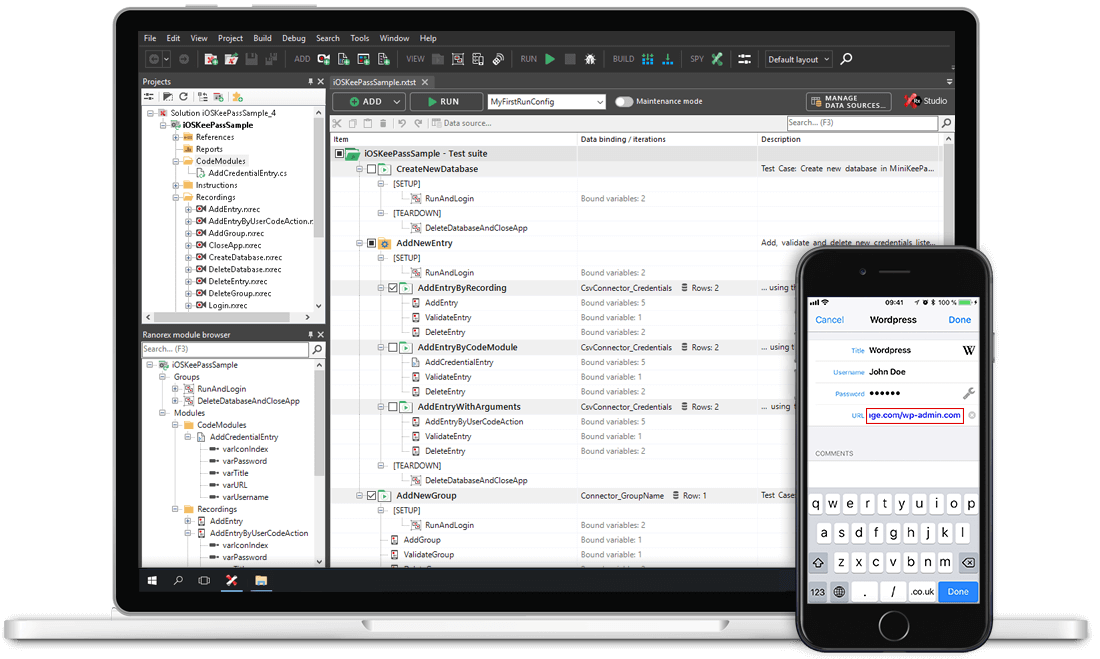
When teams overlook black-box testing, user-facing bugs can slip into production. That leads to damaged customer trust, increased support costs, and a slower release schedule. Because black-box testing doesn’t rely on code access, it gives QA teams a true-to-life view of how features perform in the hands of real users. Uncover UI issues, workflow failures, and logic gaps that internal testing might miss. By validating behavior at the surface level, black-box testing becomes a critical safeguard for user satisfaction and application reliability.
Black-box testing validates software by focusing on its external behavior and what the system does without looking at the internal code. Testers input data, interact with the UI, and verify outputs based on expected results. It’s used to evaluate functionality, usability, and user-facing workflows.
This technique is especially useful when testers don’t have access to the source code or when the priority is ensuring a smooth user experience. It allows QA teams to test applications as end users would–click by click, screen by screen—making it practical for desktop, web, and mobile platforms.
Black-box testing is most valuable when the goal is to validate what the software does without needing to understand how it’s built. It’s typically used after unit testing and during system, regression, or acceptance phases, especially when verifying real-world user experiences across platforms.
: Overwrites corrupted firmware using specific burner ( .BIN ) files.
This is not the same as "Hot Data" or temperature. It is strictly about the sequence of physical connection.
Version v5130C is a mid-era release known for stability with older and mid-range Phison chips (e.g., PS2251-03, PS2251-07, PS2303). The "C" typically indicates a minor revision or specific firmware bundle. It is popular because it balances modern features without the complexity of newer versions.
This transformation of a corporate manufacturing tool into a community recovery asset highlights a form of "digital salvage." To use MPALL effectively is to engage in a technical ritual—identifying the controller, matching the firmware, and executing the flash—that preserves the utility of silicon that would otherwise end up in a landfill. Conclusion